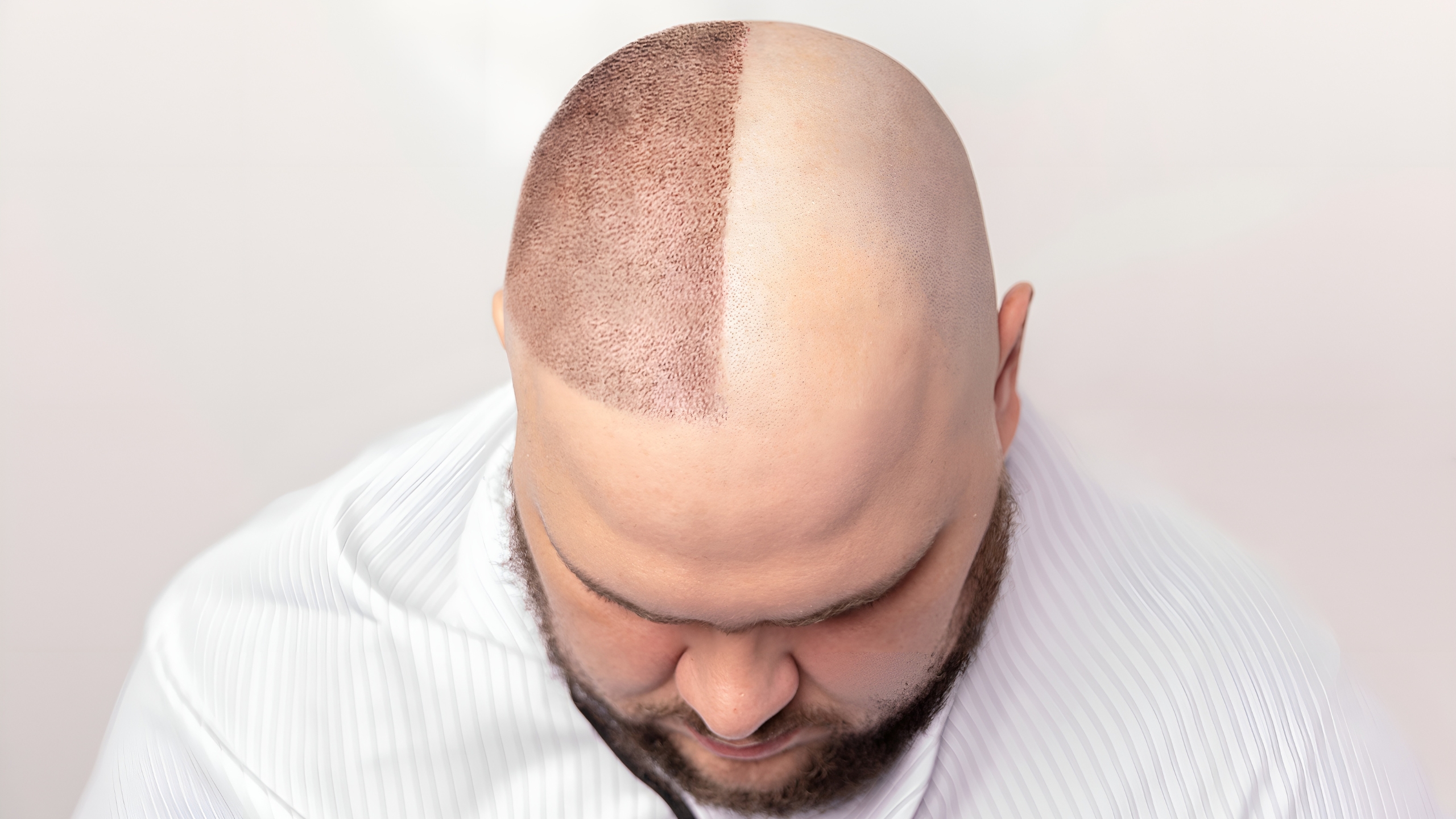
Whether you’re considering a hair transplant or simply curious about the options available, understanding these methods can empower you to make informed decisions. So, without further ado, let’s explore the three prominent techniques: Direct Hair Implantation (DHI), Follicular Unit Extraction (FUE), and Follicular Unit Transplantation (FUT).
1. Direct Hair Implantation (DHI)
Overview
DHI is an advanced hair transplant method that prioritizes precision and natural results. Unlike traditional techniques, DHI doesn’t require pre-made incisions. Instead, individual follicles are directly implanted into the recipient area. Think of it as an artist delicately placing brushstrokes on a canvas.
The Procedure
Individual Extraction: Skilled practitioners extract follicles one by one from the donor area
(usually the back of the head). It’s like a meticulous treasure hunt for healthy hair roots.
Direct Implantation: The extracted follicles are implanted directly into the recipient scalp. Imagine planting tiny seeds in a well-prepared garden.
Optimal Density: The process ensures optimal density and a lifelike hairline. It’s like arranging puzzle pieces to create a seamless picture.
Advantages
Minimal Scarring: No linear incision means minimal scarring.
Faster Recovery: Compared to FUT, DHI allows quicker healing.
High Graft Survival Rate: The transplanted hairs thrive!
Considerations
Specialized Tools: DHI requires specialized tools and skilled practitioners.
Cost: It may be costlier than other methods, but the natural results are worth it.
2. Follicular Unit Extraction (FUE)
Overview
FUE is widely practiced and known for its natural-looking results. It’s like creating a mosaic from individual tiles.
The Procedure
Harvesting Follicles: Tiny punches are used to extract individual follicles from the donor area. Think of it as collecting precious gems.
No Linear Scar: Unlike FUT, FUE leaves no linear scar. The extraction sites are small.
Artful Placement: Precise placement of grafts allows for a natural appearance.
Advantages
Minimal Scarring: Your scalp thanks you!
Suitable for Short Hair: No need to grow out your locks.
Precision: It’s all about artful placement.
Considerations
Procedure Time: FUE takes longer than DHI.
Multiple Sessions: Extensive hair loss may require multiple sessions.
3. Follicular Unit Transplantation (FUT)
Overview
FUT, also known as the “strip method,” has a long history. It’s like weaving a tapestry.
The Procedure
Surgical Removal: A strip of hair-bearing skin is surgically removed from the donor area. Picture unrolling a scroll.
Graft Dissection: The strip is divided into grafts containing hair follicles.
Transplantation: These grafts are transplanted into the recipient site. It’s like stitching together a masterpiece.
Advantages
Cost-Effective: Ideal for large areas of baldness.
Well-Established: Tradition meets innovation.
High Graft Yield: Efficiency at its best.
Considerations
Linear Scar: It leaves a linear scar (usually hidden by surrounding hair).
Recovery Time: Longer recovery due to sutures.
Hairline Design: Limited flexibility in designing the hairline.
Remember, the best technique depends on individual factors such as hair loss pattern, donor availability, and personal preferences. Consult with a skilled hair transplant specialist to determine the optimal approach for your unique situation!